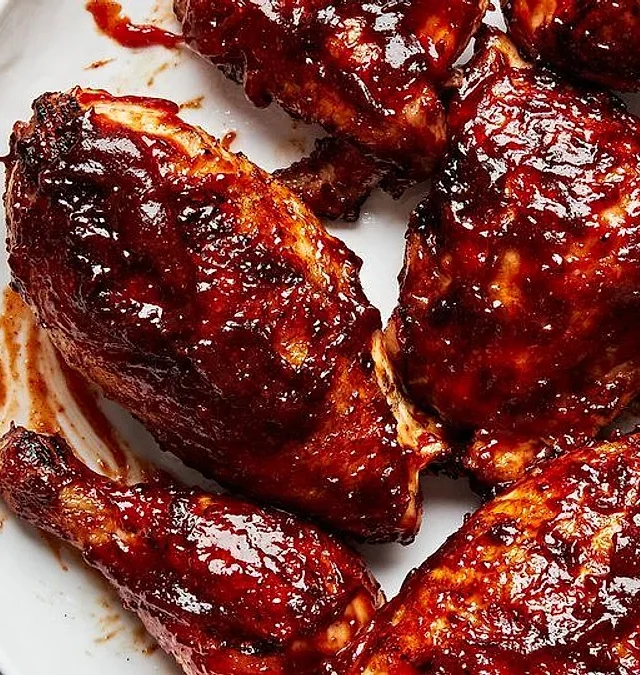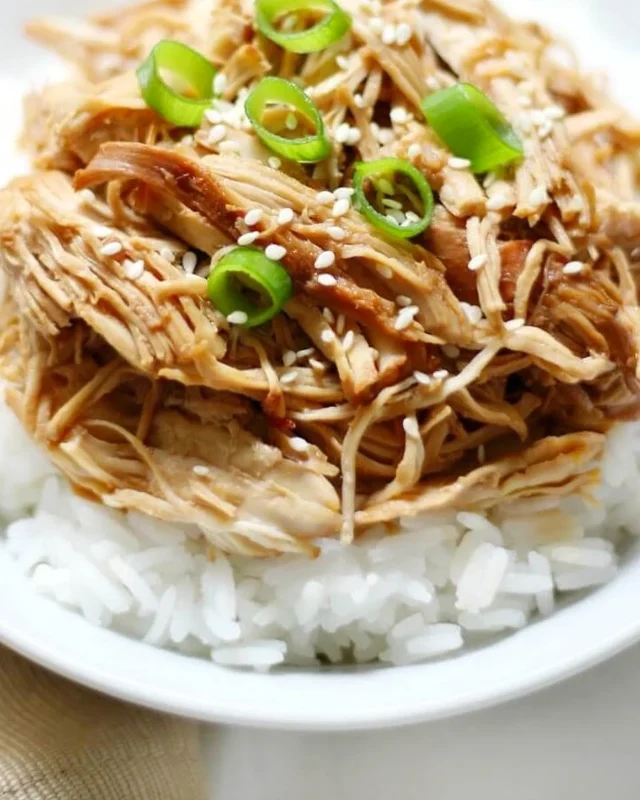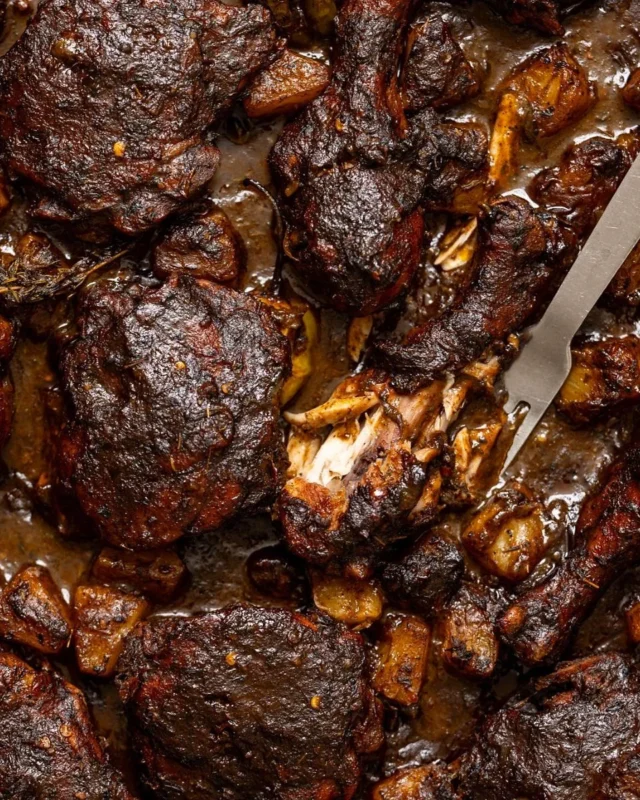
There is something about a warm bowl of rice with saucy chicken on top that makes an ordinary weeknight feel like a proper supper. My family has always gravitated toward dishes they can eat with a spoon at the kitchen table, with plenty of sauce to soak up. These sticky chicken rice bowls are exactly that kind of meal. The chicken gets a sweet and savory glaze, the rice cooks up soft in seasoned broth, and everyone gets a generous scoop without any fuss.
Sticky Chicken Brothy Rice Bowls
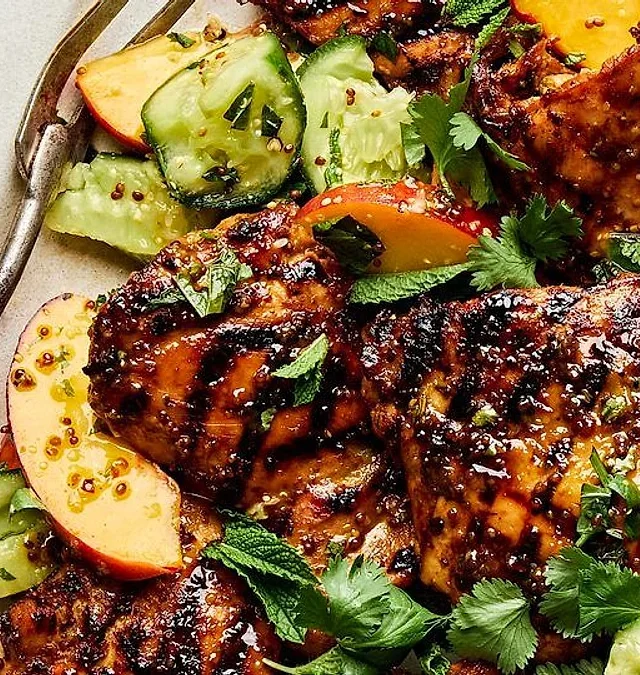
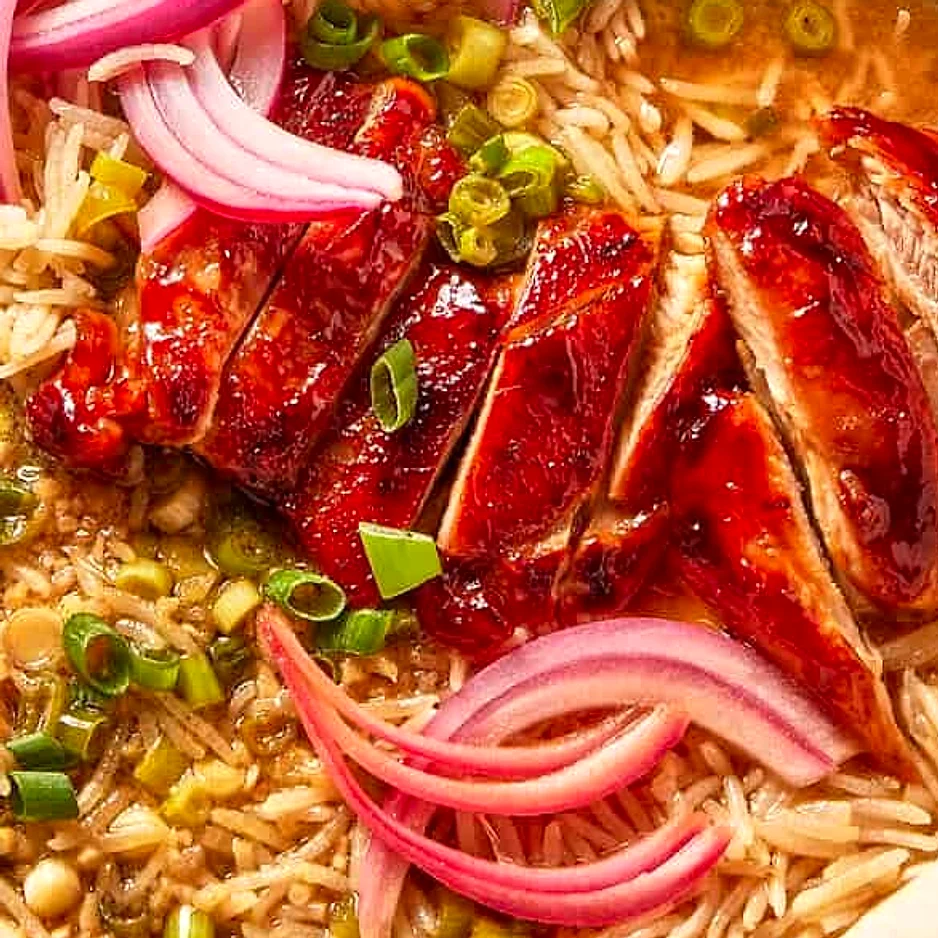
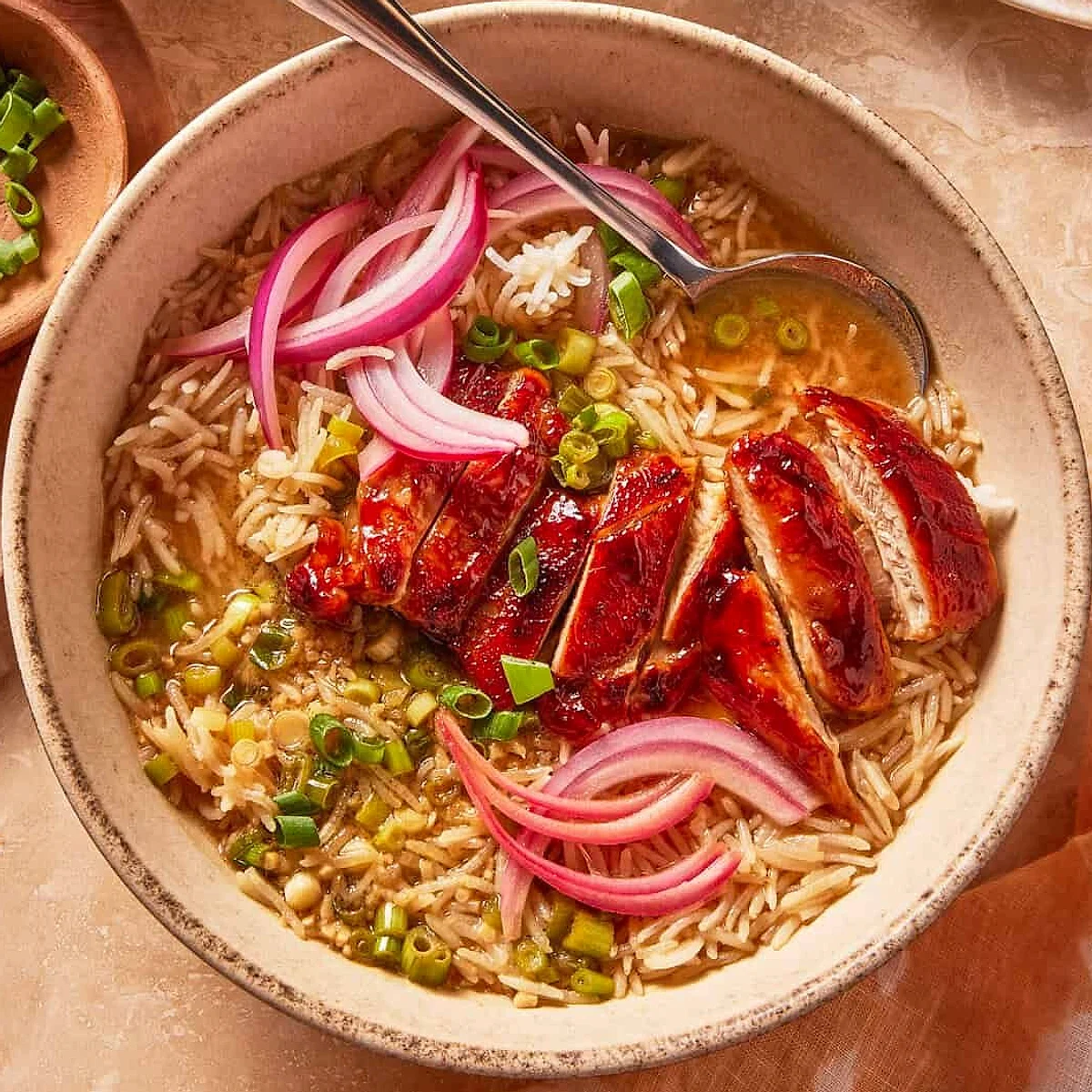
What makes this dish special is the contrast between the two halves of the bowl. The chicken thighs are seared until the edges turn golden and slightly crisp, then simmered in a glaze of soy sauce, maple syrup, rice vinegar, hoisin, and oyster sauce. As the sauce reduces, it clings to every piece and turns thick, glossy, and deeply savory with just a little sweetness. Boneless thighs stay juicy through the whole process, so the meat is tender enough to pull apart with a fork. The rice underneath is cooked gently in the same kind of broth, so each grain carries a mild, savory flavor instead of tasting plain. Spoon the sticky chicken over the rice, let the extra sauce drip down into the grains, and you have a bowl that feels hearty without being heavy.
Ingredients & Substitutions
Chicken Thighs: Boneless skinless thighs stay moist and forgiving, even if you cook them a minute too long. Chicken breast works in a pinch, but reduce the simmer time so it doesn’t dry out.
Soy Sauce: Low sodium soy sauce keeps the glaze savory without making it too salty once it reduces. Use it in both the glaze and the rice, as the recipe calls for.
Maple Syrup and Hoisin: Maple syrup gives a clean sweetness that blends well with hoisin. If you don’t have hoisin, a teaspoon of honey plus a splash of extra soy sauce will get you close.
Oyster Sauce and Sesame Oil: Oyster sauce adds depth and a little richness, while sesame oil brings a toasty aroma. Use only a teaspoon of sesame oil, since it is strong and a little goes a long way.
Chicken Broth: Bone broth gives the rice more body and a richer flavor, which is what I use at home. Regular low sodium chicken broth works just as well.
Garlic, Ginger, and Scallions: Fresh minced garlic and ginger are worth the extra minute of prep. Dried ginger will not give the same bright bite, so use fresh whenever you can.
How to Get the Perfect Sticky Glaze
The secret to a sticky glaze is patience. Once the chicken is seared and the sauce goes into the pan, let it bubble gently rather than boil hard, so the sugars in the maple syrup and hoisin can thicken without scorching. Stir occasionally and spoon the sauce over the chicken as it reduces. You will know it is ready when the liquid coats the back of a spoon and the pieces look shiny instead of watery. If it seems too thin, give it another minute or two over medium heat. Taste the sauce before you spoon it over the rice, since the level of salt can vary between brands of soy and oyster sauce, and a small splash of rice vinegar can brighten things up if it tastes flat.
How to Store Sticky Chicken Rice Bowls
Leftovers keep well in the fridge for up to three days. Store the chicken, rice, and scallions in separate airtight containers if you can, because the rice will soak up the sauce and turn soft over time. Reheat the chicken in a skillet with a splash of broth so the glaze loosens up again, and warm the rice in the microwave with a damp paper towel over the top. Assemble the bowls fresh each time for the best texture.
Can I Freeze Sticky Chicken Rice Bowls?
You can freeze the cooked chicken for up to two months, though the rice is best made fresh. Here is how I do it:
- Let the chicken cool completely, then portion it into freezer bags with a few spoonfuls of the sauce.
- Press out the air, label the bags with the date, and lay them flat in the freezer.
- Thaw overnight in the fridge, then reheat gently in a skillet with a splash of broth until hot all the way through.
 Recipe byEleanor Price
Sticky Chicken Brothy Rice Bowls
Ingredients
- 1 ½ pounds boneless skinless chicken thighs
- 3 tablespoons low sodium soy sauce, divided
- 2 tablespoons maple syrup
- 2 tablespoons rice vinegar, divided
- 2 tablespoons hoisin sauce
- 2 tablespoons oyster sauce
- 1 teaspoon sesame oil
- 2 tablespoons avocado oil
- 3 cups chicken broth (bone broth preferred)
- ⅓ cup scallions, chopped
- 3 cloves garlic, minced
- 2 tablespoons minced ginger
- 2 ½ cups cooked basmati rice
- Pickled onions, optional, for serving
Instructions
- Pat the chicken thighs dry and cut them into bite-sized pieces. Season lightly with a pinch of salt.
- Heat the avocado oil in a large skillet over medium-high heat until shimmering. Add the chicken in a single layer and sear for 3 to 4 minutes per side, until golden. Work in batches if needed. Transfer to a plate.
- Lower the heat to medium. Add the garlic and ginger to the same skillet and stir for 30 seconds until fragrant.
- Whisk together 3 tablespoons soy sauce, maple syrup, 2 tablespoons rice vinegar, hoisin, oyster sauce, and sesame oil. Pour into the skillet and bring to a gentle simmer.
- Return the chicken and any juices to the pan. Simmer for 8 to 10 minutes, stirring often, until the sauce thickens and clings to the chicken.
- While the chicken simmers, combine the chicken broth, 3 tablespoons soy sauce, and 2 tablespoons rice vinegar in a saucepan. Bring to a gentle simmer over medium heat.
- Divide the cooked basmati rice among four bowls. Ladle a generous amount of the warm brothy liquid over each portion so the rice absorbs the flavor.
- Spoon the sticky chicken over the rice. Top with chopped scallions and pickled onions if using. Serve warm.
Notes
- Bone broth adds extra richness to the rice, but regular chicken broth works well.
- Cook the basmati rice a day ahead for better texture when reheating.
- Leftover chicken can be frozen for up to two months.